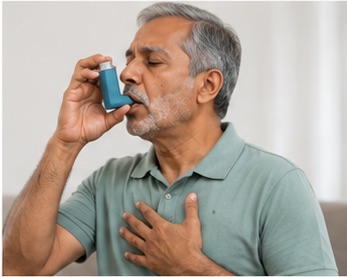
If you or a family member has been diagnosed with Chronic Obstructive Pulmonary Disease (COPD), you already know that breathlessness, coughing, and mucus production are daily companions. What many patients are not fully prepared for is an exacerbation — a sudden, severe flare that escalates beyond the usual daily baseline. At Lalitha Chest and Skin Hospital, Dr. Rajkumar Korra manages COPD exacerbations regularly and works with patients to reduce how often they occur.
What Is a COPD Exacerbation?
A COPD exacerbation is defined as an acute worsening of your respiratory symptoms beyond normal day-to-day variation, severe enough to require a change in treatment. It is not just a "bad day." It is a distinct medical event that causes additional damage to already-compromised lung tissue — and each exacerbation, on average, accelerates the overall decline in your lung function.
They are classified by severity: mild (manageable at home with increased medication), moderate (requiring additional medical treatment), and severe (requiring hospitalisation, and sometimes ICU-level care with ventilator support).
What Triggers an Exacerbation?
The most common trigger, accounting for approximately 70–80% of cases, is a respiratory infection — usually viral (the common cold, influenza, or COVID-19 can all precipitate a severe flare). Bacterial infections are the second most common cause, particularly in patients with more advanced disease.
Other triggers include air pollution, cold air, dust or fumes exposure, and — critically — non-adherence to your regular maintenance inhaler regimen. Many patients reduce or stop their controller inhalers when they feel better; this is one of the most common reasons exacerbations occur.
Symptoms That Signal an Exacerbation
Call us or come in immediately if you notice:
- Breathlessness that has worsened significantly and does not improve with your usual rescue inhaler
- A marked increase in mucus production — especially if it has changed colour to yellow, green, or brown
- Increased coughing that is more intense than your usual baseline
- New or worsening confusion, especially in elderly patients
- Blue-tinged lips or fingernails (cyanosis) — this is an emergency
Treatment at Every Level of Severity
For mild exacerbations, we increase the dose and frequency of your short-acting bronchodilators and may add a short course of oral corticosteroids. Moderate exacerbations also typically require antibiotics (if bacterial infection is suspected) and supplemental oxygen. Severe exacerbations require hospital admission — at Lalitha Chest and Skin Hospital, our 24/7 ICU is equipped for non-invasive ventilation and full intensive monitoring.
After recovery, Dr. Rajkumar Korra reviews your maintenance regimen to reduce the risk of recurrence, including checking inhaler technique, reviewing triggers, and considering pulmonary rehabilitation.
Prevention Is the Priority
The best treatment for an exacerbation is preventing it. Stay current with influenza and pneumococcal vaccinations, use your controller inhalers exactly as prescribed, avoid known pollutants, and book a review appointment at the first sign of increased symptoms — before they escalate.
To speak with Dr. Rajkumar Korra about COPD exacerbation risk and prevention, contact Lalitha Chest and Skin Hospital at +91 94413 59200, Choppadandi Road, Karimnagar – 505001. Your lungs deserve active management, not just reactive treatment.