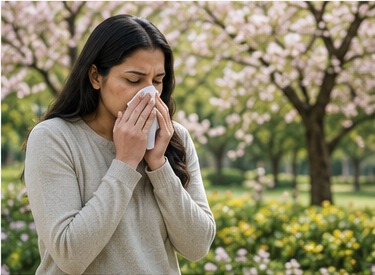
Allergic asthma is the most common form of asthma in India, and it is often misread as a seasonal cold, a persistent cough, or simple breathlessness from exertion. Many patients who come to us at Lalitha Chest and Skin Hospital have been living with symptoms for months — sometimes years — before they receive an accurate diagnosis. This does not need to happen to you.
What Makes Asthma "Allergic"?
When your immune system overreacts to a normally harmless substance — dust mites, pollen, mould spores, pet dander, cockroach droppings — it triggers inflammation in the airways. This inflammation narrows the passages that carry air to your lungs, making every breath an effort. The trigger is external; the reaction is internal; and the result, if untreated, is progressive damage to your airway tissue.
The key distinction between allergic and non-allergic asthma is that allergic asthma has identifiable triggers. That is actually good news: once we identify what provokes your airways, we can build a treatment and avoidance plan that genuinely reduces your episodes.
Early Signs You Should Not Dismiss
The early symptoms of allergic asthma are easy to explain away. Here is what to watch for:
- Recurrent dry cough, especially at night or in the early morning — not a productive chest cough, but a persistent tickle that does not bring up mucus
- Wheezing or a whistling sound when you breathe, even at rest
- Shortness of breath on mild exertion — climbing one flight of stairs, walking briskly, or carrying groceries
- Chest tightness that feels like a band across the front of your chest, arriving suddenly and easing slowly
- Symptoms that worsen in specific environments — your bedroom, a dusty room, outdoors during pollen season, or around animals
If two or more of these apply to you, and they appear or worsen in the presence of specific substances, that pattern is diagnostically significant. Please do not wait for a severe episode.
How We Diagnose and Confirm Allergic Asthma
At Lalitha Chest and Skin Hospital, Dr. Rajkumar Korra uses a combination of approaches to confirm the diagnosis accurately. A spirometry test measures how much air you can exhale and how fast — it is the gold standard for detecting airway obstruction. We may also recommend a bronchodilator reversibility test to see whether the obstruction improves with medication, which is a hallmark of asthma. Skin-prick allergy testing or blood IgE tests help identify your specific triggers.
We do not guess. A precise diagnosis leads to precise treatment.
Treatment: What You Can Expect
Modern allergic asthma management is effective and well-tolerated. The two pillars are controller therapy — typically inhaled corticosteroids that reduce chronic airway inflammation — and rescue medication for acute episodes. If your allergy triggers are identified clearly, allergen immunotherapy may be appropriate, progressively desensitising your immune system over time.
The goal is not just to manage attacks. It is to reduce the frequency and severity of episodes until they rarely — if ever — occur.
Your Next Step
If you recognise these symptoms in yourself or someone in your family, come and see Dr. Rajkumar Korra at Lalitha Chest and Skin Hospital, Opp. Adharshnagar Board, Choppadandi Road, Karimnagar – 505001. Call us on +91 94413 59200 to book a consultation. Early diagnosis is the single most powerful step you can take — not just for symptom relief, but for protecting your lungs long-term. We are here for you.