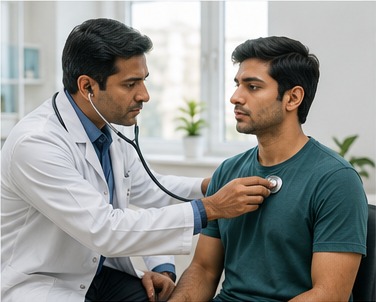
"Pneumonia is not a condition to manage at home without a medical assessment. If you or a family member has a high fever with breathlessness and a productive cough, see a doctor the same day — not the next week," advises Dr. Rajkumar Korra, MD (Pulmonology), Consultant Pulmonologist at Lalitha Chest & Skin Hospital, Karimnagar.
What Is Pneumonia?
Pneumonia is an infection of the lung tissue itself — not just the airways (as in bronchitis), but the air sacs (alveoli) deep within the lungs where oxygen transfer happens. When pneumonia strikes, these air sacs fill with pus, fluid, and inflammatory cells instead of air, disrupting the lung's ability to provide oxygen to the blood.
Causes of Pneumonia
- Bacterial — Streptococcus pneumoniae (pneumococcus) is the most important cause. Klebsiella pneumoniae is particularly associated with diabetic patients and can cause severe, destructive pneumonia. Haemophilus influenzae is common in COPD and elderly patients.
- Viral — Influenza, SARS-CoV-2 (COVID-19), and RSV (most important in infants). Atypical bacteria like Mycoplasma cause milder "walking pneumonia" with gradual onset and dry cough.
- Fungal — Rarer but important in immunocompromised patients — including Mucormycosis, devastatingly associated with poorly controlled diabetes during COVID-19.
Who Is at Risk?
- Young children under 5 and elderly adults above 65
- People with diabetes (Klebsiella is particularly dangerous)
- Smokers and bidi users
- COPD patients and immunocompromised individuals (HIV, cancer, transplant)
- People recently hospitalised
- Post-COVID patients with damaged lung defences
Symptoms of Pneumonia
- High fever with sudden onset, often 39 to 40°C, accompanied by shaking chills
- Productive cough with yellow, green, or rust-coloured sputum
- Breathlessness more severe than a typical cold
- Chest pain that is sharp, on one side, and worsens with deep breathing
- Fast breathing — above 25 breaths per minute is a key severity indicator
In elderly patients, pneumonia may present without classic fever — watch for sudden confusion, unusual drowsiness, falls, or decline in daily function. "If grandmother just doesn't seem right — more confused, eating less, sleeping more — think pneumonia and get a medical assessment," says Dr. Korra.
How to Tell Pneumonia Apart from TB
This distinction is critically important in India. Pneumonia has an acute onset (hours to days) with high fever, while TB develops gradually (weeks to months) with low-grade evening fever. Pneumonia responds to antibiotics within 48 to 72 hours; TB does not. Any patient with pneumonia who does not improve after 48 to 72 hours of appropriate antibiotics must be evaluated for TB — free CBNAAT testing is available at all NTEP centres.
Diagnosis
At Lalitha Chest & Skin Hospital, Dr. Korra's pneumonia workup includes chest X-ray (confirms diagnosis and extent), complete blood count with CRP and procalcitonin (assess severity), sputum Gram stain and culture, pulse oximetry (SpO₂ below 94% warrants hospital assessment), and CBNAAT sputum test to rule out TB.
Treatment
- Mild to moderate pneumonia — Often treated at home with oral antibiotics (amoxicillin-clavulanate or azithromycin), rest, fluids, and monitoring.
- Hospitalisation is needed when the CURB-65 severity score is 2 or above, oxygen saturation is low, or the patient has significant underlying conditions like diabetes, COPD, or heart failure.
- Severe pneumonia requires intravenous antibiotics, supplemental oxygen, and in critical cases, ICU admission with mechanical ventilation. Lalitha Chest & Skin Hospital is equipped with advanced ventilator support.
Prevention
Vaccination is the most effective prevention. The pneumococcal vaccine and annual influenza vaccine significantly reduce risk — especially important for elderly adults, diabetics, and those with chronic lung or heart conditions. Good hand hygiene, avoiding smoking and biomass smoke, maintaining nutrition, and controlling diabetes are all important measures.
Emergency Signs — Call 102 or 108 Immediately
If breathing is very rapid and laboured, lips or fingertips turn blue, there is confusion or inability to rouse the person, SpO₂ drops below 90% on a home pulse oximeter, or a child makes grunting sounds with each breath — do not attempt to manage at home.
Frequently Asked Questions
Q: Can I treat pneumonia at home or do I need to go to the hospital?
Mild pneumonia in otherwise healthy adults can be treated at home with oral antibiotics. However, if you are elderly, diabetic, have COPD or heart disease, or if your oxygen levels are low, hospital treatment is safer. Dr. Korra uses the CURB-65 scoring system to guide this decision.
Q: How is pneumonia different from a bad cold or bronchitis?
A cold affects your nose and throat. Bronchitis affects the airways. Pneumonia infects the lung tissue itself — the air sacs where oxygen enters your blood. Pneumonia causes higher fever, worse breathlessness, and carries far greater risk. A chest X-ray distinguishes pneumonia from bronchitis.
Q: Can pneumonia come back after treatment?
Yes — especially in people with underlying risk factors like diabetes, COPD, or weakened immunity. Vaccination and controlling underlying conditions significantly reduce recurrence.
Q: Should I buy a pulse oximeter for home use?
Yes — a home pulse oximeter (₹500 to ₹1,500) is a worthwhile investment, especially for households with elderly members, COPD patients, or young children. SpO₂ below 94% with fever and cough means seek medical help urgently.
Searching for "pneumonia treatment near me" or "best lung hospital near me" in Karimnagar? Visit Lalitha Chest & Skin Hospital. Dr. Rajkumar Korra provides expert pneumonia diagnosis, treatment, oxygen therapy, and ventilator support. Book at +91 94413 59200.