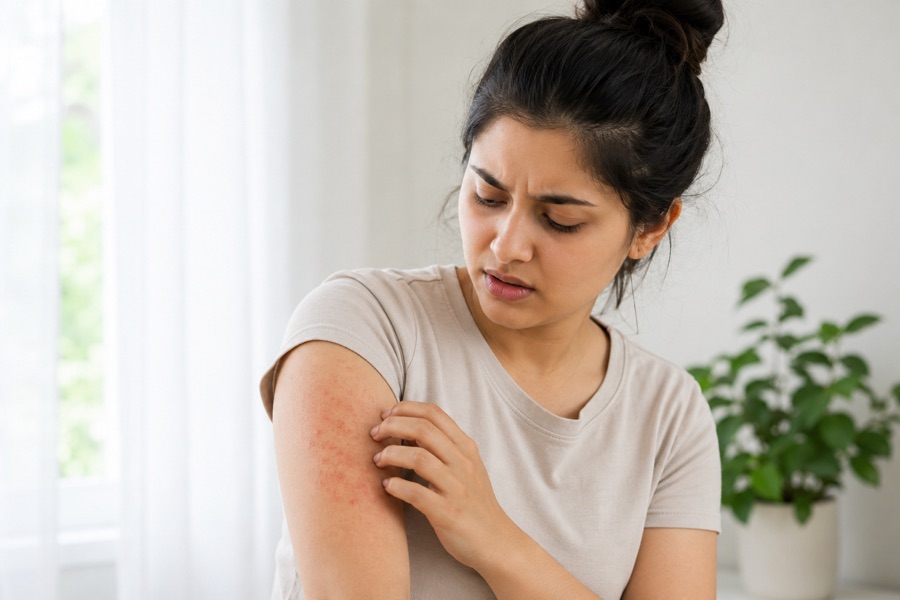
"Atopic dermatitis is a lifelong condition for many patients, but with a proper skincare routine and the right medications, flare-ups become less frequent and less severe over time," says Dr. B. Jyothi, Consultant Dermatologist, Lalitha Chest & Skin Hospital, Karimnagar.
What Is Atopic Dermatitis?
Atopic dermatitis is the most common type of eczema. It occurs when the skin barrier is weaker than normal — losing moisture easily and becoming overly sensitive to irritants, allergens, and infection. It often begins in early childhood and may continue into adulthood, though many children improve significantly as they grow older.
It is part of the "atopic triad" — patients with atopic dermatitis are significantly more likely to also develop asthma and allergic rhinitis (hay fever). If your child has eczema, it is important to watch for these related conditions as they grow.
Causes and Triggers
- Genetic factors — A defect in the filaggrin gene weakens the skin barrier, making it unable to retain moisture. Atopic dermatitis runs strongly in families.
- Immune system overreaction — The immune system responds too strongly to harmless triggers, causing chronic skin inflammation.
Common triggers that cause flare-ups:
- Dry weather and low humidity
- Soaps, detergents, and shampoos with harsh chemicals or fragrances
- Sweat and heat
- Dust mites, pet dander, and pollen
- Rough fabrics like wool or synthetic fibres
- Stress and anxiety
- Certain foods — dairy, eggs, nuts in some children
- Skin infections, especially Staphylococcus aureus
Symptoms
- Intense, persistent itching — Often much worse at night, regularly disrupting sleep.
- Dry, scaly patches — Commonly on cheeks, elbows, knees, and scalp in children.
- Red or brownish-grey patches — Especially in body folds — behind knees, inside elbows, around the neck.
- Thickened, cracked skin — From repeated scratching over time (lichenification).
- Darkened or discoloured skin — Long-term inflammation can cause hyperpigmentation or hypopigmentation, especially in darker skin tones.
Diagnosis
There is no single blood test for atopic dermatitis. Dr. B. Jyothi diagnoses it by examining the skin, reviewing your medical and family history, and identifying symptom patterns and triggers. A patch test or skin prick test may be done to identify specific allergens causing flare-ups.
Treatment Options
1. Daily Skincare — The Foundation of Treatment:
- Moisturise at least twice a day with a thick, fragrance-free cream or ointment — especially within 3 minutes of bathing.
- Bathe in lukewarm (not hot) water and pat the skin dry gently.
- Use mild, soap-free, pH-balanced cleansers.
2. Topical Medications:
- Topical Corticosteroids — The most commonly prescribed treatment. Reduce inflammation and itching during flare-ups.
- Topical Calcineurin Inhibitors (Tacrolimus, Pimecrolimus) — Steroid-free. Ideal for sensitive areas like the face, eyelids, and skin folds. Safe for longer-term use.
- Antihistamines — Help relieve itching, particularly at night, improving sleep.
3. Advanced Treatments for Severe Cases:
- Dupilumab (Dupixent) — A biologic injection targeting the immune pathway (IL-4/IL-13) driving atopic dermatitis. Highly effective for moderate to severe cases. Very well-tolerated.
- Oral Immunosuppressants — Cyclosporine or methotrexate for short-term control of severe flares.
4. Phototherapy: Narrowband UVB (NB-UVB) uses controlled ultraviolet light to reduce inflammation and itching. Sessions are done 2 to 3 times per week; a full course is 20 to 30 sessions.
Home Care Tips
- Identify your personal triggers — keep a symptom diary.
- Use a humidifier in dry weather or air-conditioned rooms.
- Dress in loose, soft cotton clothing — avoid synthetic fabrics and wool.
- Keep nails short and clean to reduce skin damage from scratching.
- Use fragrance-free laundry detergent.
Frequently Asked Questions
Q: Is atopic dermatitis contagious?
No. You cannot catch it from another person. It is not caused by uncleanliness.
Q: Will my child grow out of it?
Many children see significant improvement by adolescence. However, some carry it into adulthood. Regular treatment and trigger avoidance greatly improve long-term outcomes.
Q: Are steroid creams safe to use long-term?
Low-potency steroids can be used intermittently for longer periods, but high-potency steroids should only be used for short courses under medical supervision. Steroid-free alternatives like tacrolimus are available for sensitive areas.
Q: Does diet affect atopic dermatitis?
Food allergies can worsen eczema in some children — particularly reactions to eggs, milk, and nuts. Elimination diets should only be done under medical supervision to avoid nutritional deficiencies.
Searching for an "atopic dermatitis specialist near me" or "eczema treatment in Karimnagar"? Visit Lalitha Chest & Skin Hospital. Dr. B. Jyothi provides personalised management plans for atopic dermatitis at all stages. Book at +91 94413 59200.