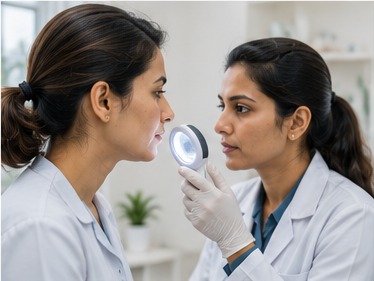
"Acne is not caused by poor hygiene or eating oily food. It is a medical condition with real biological causes. Early treatment prevents scars that last a lifetime," says Dr. B. Jyothi, Consultant Dermatologist, Lalitha Chest & Skin Hospital, Karimnagar.
What Is Acne?
Acne happens when the pores of your skin get blocked. Each pore contains a hair follicle and a sebaceous (oil) gland. When oil, dead skin cells, and bacteria combine, they clog the pore and cause inflammation — leading to blackheads, whiteheads, pimples, cysts, and nodules.
What Causes Acne?
- Overproduction of sebum — Excess oil mixes with dead skin cells and clogs hair follicles. This is the primary cause.
- Hormones — Fluctuations in oestrogen, progesterone, and testosterone trigger more oil production. This is why acne peaks during puberty and also affects adult women during menstruation, pregnancy, or menopause.
- Bacteria — Cutibacterium acnes lives naturally on skin but multiplies inside clogged pores, triggering inflammation.
- Stress — Stress hormones directly trigger more sebum production and can worsen the condition.
- Certain medications — Steroids, lithium, and some contraceptives can trigger or worsen acne.
- Family history — Acne tends to run in families.
Types of Acne
- Blackheads — Open pores clogged with oxidised oil. Appear dark.
- Whiteheads — Closed blocked pores. Small, white or flesh-coloured bumps.
- Papules — Small, red, tender bumps with no visible pus.
- Pustules — Pimples with visible pus at the tip.
- Nodules — Large, solid, painful lumps deep in the skin. Cannot be squeezed.
- Cysts — The most severe type. Painful, pus-filled lumps that almost always cause permanent scarring if untreated.
Common Myths About Acne
Myth: Oily food causes acne. There is no direct link. High-glycaemic foods and dairy may slightly worsen acne in some people, but oily food itself is not a cause.
Myth: Washing your face more often will cure acne. Over-washing strips the skin and triggers more oil production, worsening acne. Wash gently twice a day with a mild, soap-free cleanser.
Myth: Popping pimples speeds up healing. Squeezing pushes bacteria deeper, causes more inflammation, and is the fastest route to permanent scarring.
Treatment Options
Topical Treatments:
- Benzoyl Peroxide — Kills acne bacteria and reduces inflammation.
- Retinoids (Tretinoin, Adapalene) — Unblock pores and speed up skin cell turnover. The gold standard for long-term acne control.
- Salicylic Acid — Helps unclog pores and reduce blackheads.
- Topical Antibiotics (Clindamycin) — Reduce bacteria on skin surface.
Oral Medications:
- Antibiotics — Doxycycline or azithromycin for moderate to severe acne.
- Oral Contraceptive Pills — Help regulate hormones in women with hormonal acne.
- Isotretinoin — A powerful vitamin A derivative for severe or cystic acne. Very effective but requires close medical supervision and regular blood tests.
In-Clinic Procedures:
- Chemical Peels — Remove the top skin layer, unclog pores, and reduce pigmentation.
- Comedone Extraction — Safe, clinical removal of blackheads and whiteheads by a dermatologist.
- Laser and Light Therapy — Reduce bacteria and inflammation; also improve post-acne marks.
- Steroid Injections — For large, painful cysts, a direct cortisone injection flattens them quickly.
Home Care Tips
- Cleanse gently twice a day with a mild, soap-free, non-comedogenic cleanser.
- Use only non-comedogenic moisturisers and sunscreens — labelled 'oil-free' or 'gel-based.'
- Do not touch your face throughout the day — hands carry bacteria and oil.
- Change pillowcases every 2 to 3 days.
- Remove all makeup before sleeping.
- Never pick, pop, or squeeze pimples.
- Always use SPF 30+ sunscreen — sun damage worsens acne marks.
When to See a Dermatologist
See Dr. B. Jyothi if your acne is not improving with over-the-counter products after 6 to 8 weeks, if you have painful nodules or cysts, if acne is leaving dark spots or scars, or if it is affecting your confidence and daily life.
"Scarring from severe acne is preventable. Do not wait until marks have formed — come in early for a treatment plan tailored to your skin type," advises Dr. B. Jyothi.
Frequently Asked Questions
Q: Will acne go away on its own?
Mild acne sometimes resolves, but moderate to severe acne usually needs treatment. Untreated cystic acne almost always leaves permanent scars.
Q: Can adults get acne?
Absolutely. Adult acne is very common, especially in women due to hormonal fluctuations around the menstrual cycle, pregnancy, or menopause.
Q: How long does treatment take to work?
Most topical treatments take 6 to 8 weeks. Oral medications like isotretinoin take 4 to 6 months. Patience is essential — switching treatments too quickly is a common mistake.
Q: Does sunscreen cause acne?
Only the wrong type. Always choose a gel-based, oil-free, non-comedogenic sunscreen for acne-prone skin.
Searching for an "acne specialist in Karimnagar" or "best lady skin specialist in Karimnagar"? Visit Lalitha Chest & Skin Hospital. Dr. B. Jyothi offers personalised acne treatment plans for all skin types and ages. Book at +91 94413 59200.