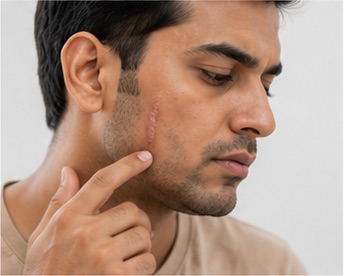
A scar is not just a cosmetic concern. For many patients, it carries the memory of an injury, surgery, or illness — and its visibility on the face, neck, or hands can affect confidence, work, and daily life. At Lalitha Chest and Skin Hospital, Dr. B. Jyothi approaches scar treatment practically and honestly: setting realistic expectations while delivering meaningful improvement through the most appropriate technique for your scar type.
Why Scars Form
When the skin is injured deeply enough to damage the dermis — the layer beneath the surface — the body repairs it using collagen fibers. These fibers do not perfectly replicate the original skin architecture. The result is scar tissue: denser, less elastic, differently pigmented, and structurally distinct from normal skin.
The severity of scarring depends on several factors: the depth and size of the original wound, how it healed (slowly or quickly, with or without infection), individual skin type, the anatomical location, and genetic tendency toward certain scar types.
Types of Scars and Their Characteristics
Understanding your scar type is the first step:
- Atrophic scars are depressed below the skin surface — caused by acne, chickenpox, or surgery. Boxcar, rolling, and icepick scars are subtypes common after severe acne.
- Hypertrophic scars are raised and red, remaining within the original wound boundary. They often improve over time but benefit from early treatment.
- Keloid scars grow beyond the original wound margins, are firm and raised, and may continue to enlarge. They are more common in patients with darker skin tones and have a hereditary component.
- Contracture scars form after burns, tightening the skin and sometimes restricting movement over joints.
- Surgical scars vary widely depending on the procedure, closure technique, and healing.
Treatment Options Dr. Jyothi Uses
Intralesional corticosteroid injections are the first-line treatment for hypertrophic and keloid scars — they reduce collagen overproduction and flatten raised tissue over a series of sessions.
Fractional laser resurfacing creates thousands of microscopic treatment zones that stimulate new collagen synthesis and remodel existing scar tissue. It is particularly effective for atrophic acne scars. Dr. B. Jyothi uses six types of laser at Lalitha Chest and Skin Hospital.
Microneedling (with or without PRP) uses controlled micro-injuries to stimulate collagen remodelling in atrophic scars, with minimal downtime.
Chemical peels and dermabrasion resurface superficial atrophic scars and improve skin texture and pigmentation around scar tissue.
Silicone gel sheets and pressure therapy are evidence-based preventive and adjunct treatments, particularly useful for fresh surgical scars and burn-related contractures.
Surgical scar revision — including excision, W-plasty, or Z-plasty — is considered for scars where the position, orientation, or size significantly limits the outcome of non-surgical techniques.
Starting with the Right Assessment
The starting point for any scar treatment is an honest, thorough assessment. Dr. B. Jyothi examines the scar under dermoscopy, reviews your skin type and tone (using the Fitzpatrick classification to guide laser parameter selection), and discusses your goals and timeline before recommending any treatment.
No single session resolves most scars — but with the right protocol, the improvements are consistent and lasting.
To book a scar assessment with Dr. B. Jyothi, contact Lalitha Chest and Skin Hospital at +91 94413 59200, Opp. Adharshnagar Board, Choppadandi Road, Karimnagar – 505001. A better outcome begins with a proper diagnosis.