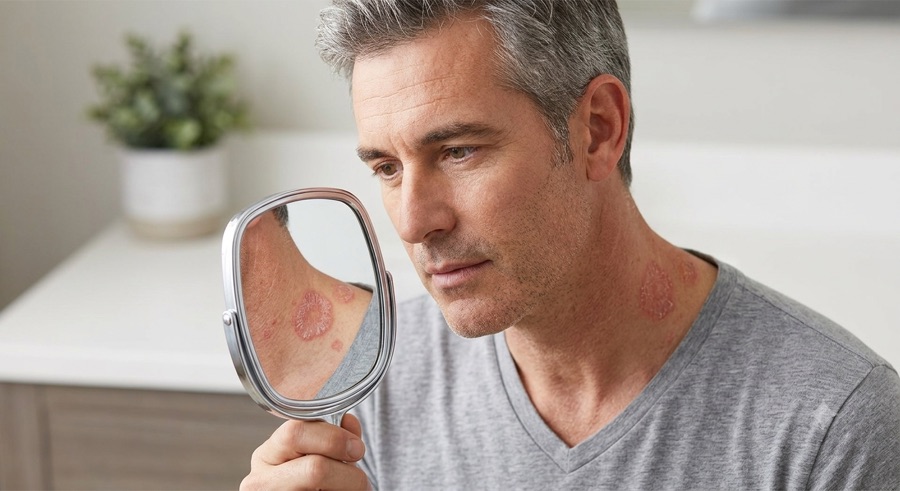
"India is currently facing an epidemic of treatment-resistant fungal infections — largely because patients have been using combination steroid-antifungal creams for months or years. These creams provide temporary relief while making the fungus harder to treat and allowing it to spread. Please see a dermatologist before using any cream," says Dr. B. Jyothi, Consultant Dermatologist, Lalitha Chest & Skin Hospital, Karimnagar.
What Are Fungal Skin Infections?
Fungal skin infections (tinea) are caused by dermatophyte fungi that thrive on keratin — the protein found in skin, hair, and nails. They are contagious and spread through skin contact, shared items, and contaminated surfaces. India's hot, humid climate provides ideal conditions for fungal growth.
Common Types of Fungal Skin Infections
- Tinea Corporis (Ringworm / Daad) — Ring-shaped itchy patches on body skin, with raised scaly edges and clearer centre. Very common in India.
- Tinea Cruris (Jock Itch / Khaaj) — Itchy rash in the groin, inner thighs, and buttocks. More common in men. Worsens with sweating and tight clothing.
- Tinea Pedis (Athlete's Foot) — Itchy, scaly, cracked skin between the toes. Associated with sweating and closed footwear.
- Tinea Unguium (Nail Fungus / Onychomycosis) — Thickened, yellow-brown, crumbly nails. Requires longer treatment — often several months.
- Tinea Capitis (Scalp Ringworm) — Scaly patches with hair loss on the scalp. Primarily affects children. Requires oral antifungal treatment.
- Tinea Versicolor (Pityriasis Versicolor) — Light or dark patches (hypopigmented or hyperpigmented) caused by Malassezia yeast. Not classic ringworm — treated differently.
- Candidiasis — Caused by Candida yeast (not dermatophytes). Presents as bright red, moist rash in skin folds (underarms, beneath breasts, groin). Common in diabetics and those with weakened immunity.
Risk Factors
- Hot, humid climate and heavy sweating
- Tight synthetic clothing
- Diabetes mellitus (promotes fungal overgrowth)
- Obesity (creates warm, moist skin folds)
- Sharing towels, clothes, or footwear
- Walking barefoot in public areas
- Prolonged use of antibiotics or corticosteroids
The Steroid-Antifungal Combination Cream Problem
Over-the-counter creams containing both antifungal and corticosteroid (steroid) compounds — sold widely in India without prescription — temporarily relieve itching. However, the steroid suppresses the immune response that fights fungal infection, allowing the fungus to multiply below the skin surface while the surface looks temporarily better. Stopping the cream causes dramatic worsening. Long-term use also causes skin thinning, stretch marks, and facilitates resistance to antifungal medicines. This pattern creates infections that are much harder to cure.
Diagnosis
Dr. B. Jyothi diagnoses fungal infections clinically and where needed, confirms with KOH (potassium hydroxide) microscopy of skin scrapings — a quick, in-office test. Nail infections may need fungal culture to identify the exact organism and guide treatment choice.
Treatment
- Topical antifungals — Clotrimazole, miconazole, terbinafine, or luliconazole applied once or twice daily. Course of 4 to 6 weeks for body fungal infections (not 1 to 2 weeks as commonly assumed).
- Oral antifungals — Required when the infection is extensive, involves scalp or nails, or has not responded to topical therapy. Terbinafine or itraconazole depending on organism type.
- Nail infections — Usually need 3 to 6 months of oral antifungal therapy. Topical nail lacquers alone are rarely sufficient for onychomycosis.
Prevention
- Keep skin dry — especially folds, groin, and between toes
- Wear cotton, loose, breathable clothing
- Change socks and underwear daily
- Never share towels, footwear, or nail clippers
- Wear footwear in public bathrooms and changing rooms
- Control blood sugar if diabetic
Frequently Asked Questions
Q: I have used antifungal cream for 3 months but the rash keeps coming back. What do I do?
Stop the cream and see a dermatologist immediately. Persistent or recurring infection after prolonged topical treatment usually means steroid-induced resistant fungal infection or incorrect diagnosis. A proper assessment and possibly oral antifungal therapy is needed.
Q: Is ringworm actually a worm?
No. "Ringworm" is a common name for tinea — a fungal infection. The name comes from the ring-shaped appearance. There is no actual worm involved.
Q: I have diabetes and keep getting fungal infections in my skin folds. Is this related?
Yes — elevated blood sugar significantly promotes fungal growth, particularly candidiasis. Better blood sugar control reduces recurring skin infections. A dermatologist treats the infection; controlling diabetes prevents recurrence.
Q: Are fungal nail infections serious?
They are not dangerous, but they are cosmetically distressing, can be painful, and will not resolve without proper treatment. They require months of oral antifungal therapy. See a dermatologist for nail culture before starting treatment.
Searching for "fungal infection treatment in Karimnagar" or "skin specialist near me"? Visit Lalitha Chest & Skin Hospital. Dr. B. Jyothi provides proper fungal infection diagnosis, culture testing, and antifungal treatment. Book at +91 94413 59200.