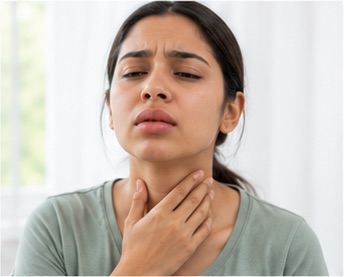
Angioedema can be frightening. One moment you are fine; the next, your lip is swollen to twice its size, your throat feels tight, or one eyelid has swollen shut. It is not rare, and it is not something you should try to manage on your own. At Lalitha Chest and Skin Hospital, Dr. B. Jyothi sees angioedema cases regularly and understands both the immediate urgency and the longer-term investigation that recurrent episodes require.
What Is Angioedema?
Angioedema is swelling that occurs in the deep layers of the skin and subcutaneous tissue, rather than on the surface. It is caused by a sudden release of fluid into these tissues, usually triggered by an immune reaction or a disorder in the proteins that control vascular permeability. It most commonly affects the face (especially around the eyes and mouth), the throat, the tongue, the hands, feet, and genitals.
When it involves the throat, it can become a medical emergency — severe angioedema can obstruct the airway within minutes. If you or someone near you develops rapid swelling around the throat or has difficulty swallowing and breathing, call emergency services immediately.
What Causes It?
Angioedema has several distinct causes, and identifying yours is the essential first step in preventing future episodes:
- Allergic angioedema — triggered by foods (nuts, shellfish, dairy, eggs), insect stings, medications, or latex; typically accompanied by hives (urticaria)
- Drug-induced angioedema — ACE inhibitors (a common blood pressure drug) are among the most frequent culprits; the reaction can appear after months of safe use
- Hereditary angioedema (HAE) — a rare genetic condition caused by a deficiency in C1-inhibitor protein; recurs unpredictably without hives
- Idiopathic angioedema — no identifiable trigger found; requires long-term management with antihistamines or other suppressants
Symptoms to Recognise
The defining feature is deep, non-pitting swelling that feels firm and slightly tender rather than itchy. It may appear suddenly, worsen over minutes to hours, and resolve over 24–72 hours. Associated symptoms can include pain or burning at the swelling site, stomach cramping (if the gut wall is involved), and in severe cases, hoarseness, stridor, or difficulty breathing.
Not all angioedema episodes look dramatic. Some patients describe a mild puffiness they dismissed for months before a more serious episode arrived.
How Dr. Jyothi Approaches Treatment
Dr. B. Jyothi's approach begins with a thorough history: what happened before each episode, what medications you take, whether family members have similar episodes, and whether hives accompany the swelling. Investigations may include a full blood count, complement levels (C3, C4, C1q, C1-esterase inhibitor), IgE testing, and an allergy workup.
Acute episodes are treated with antihistamines, corticosteroids, and where necessary, epinephrine. Recurrent or hereditary cases are managed with targeted preventive therapy tailored to the underlying mechanism.
Book a Consultation Before the Next Episode
If you have experienced unexplained swelling — even once — please do not wait for a recurrence. Come and see Dr. B. Jyothi at Lalitha Chest and Skin Hospital, Choppadandi Road, Karimnagar – 505001. Call +91 94413 59200 to schedule your appointment. We will investigate the cause thoroughly and give you a management plan that reduces both your risk and your anxiety.