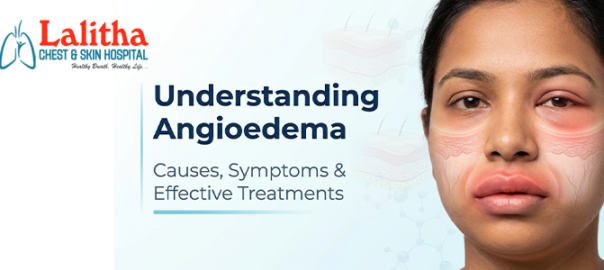
Angioedema is a condition that causes sudden swelling beneath the skin, often affecting areas such as the face, lips, eyes, throat, hands, or feet. While it may appear similar to hives, angioedema occurs deeper in the skin and can sometimes become serious, especially if it affects breathing.
Understanding the causes, recognizing the symptoms, and learning how to manage angioedema can help prevent complications and improve overall quality of life.
With expert guidance from Dr. B. Jyothi at Lalitha Chest and Skin Hospital, this blog provides a clear and comprehensive overview of its symptoms, causes, effective solutions, and available treatment options.
What is Angioedema?
Angioedema is a type of swelling that develops in the deeper layers of the skin and mucous membranes. It is often linked to an allergic reaction, but can also occur due to non-allergic causes. The swelling may appear suddenly and last for several hours to a few days.
In some cases, angioedema can occur along with urticaria (hives), while in others, it may happen independently.
“Angioedema can develop suddenly and may become serious if not treated in time; however, early diagnosis, identification of triggers, and prompt medical care can effectively control symptoms and prevent complications,” says Dr. B. Jyothi, the best skin specialist in Karimnagar.
Causes of Angioedema:
Angioedema can be triggered by a variety of factors. Identifying the underlying cause is essential for effective treatment and prevention.
- Allergic Reactions:
Common allergens that may trigger angioedema include:
- Certain foods (nuts, shellfish, eggs)
- Medications (antibiotics, pain relievers)
- Insect bites or stings
- Latex
- Medication-Induced Angioedema:
Some medications, especially ACE inhibitors used for blood pressure control, are known to cause angioedema in certain individuals.
- Hereditary Angioedema:
This is a rare genetic condition caused by a deficiency or dysfunction of a protein called C1 inhibitor. It often leads to recurrent episodes of swelling without itching or hives.
- Infections and Illness:
Viral or bacterial infections and underlying medical conditions may also contribute to episodes of angioedema.
- Idiopathic Causes:
In some cases, the exact cause cannot be identified. This is known as idiopathic angioedema.
Symptoms of Angioedema
The symptoms of angioedema can vary from mild to severe and may include:
- Sudden swelling beneath the skin
- Puffiness around the eyes and lips
- Swelling of the tongue or throat
- Difficulty breathing (in severe cases)
- Abdominal pain (especially in hereditary angioedema)
- Non-itchy swelling (common in non-allergic types)
Symptoms may develop rapidly and can recur depending on the underlying cause.
When to Seek Immediate Medical Help
Angioedema can become life-threatening if it affects the airway. Seek urgent medical care if you experience:
- Difficulty breathing or swallowing
- Swelling of the throat or tongue
- Dizziness or fainting
- Rapid progression of swelling
Prompt treatment can prevent serious complications.
Diagnosis of Angioedema
To diagnose angioedema, a healthcare provider may:
- Review your medical history and symptoms
- Identify potential triggers
- Conduct blood tests to check for allergies or genetic factors
- Evaluate medication history
Accurate diagnosis helps in choosing the most effective treatment plan.
Effective Care and Treatment Options
Treatment for angioedema depends on its cause and severity.
- Antihistamines:
These are commonly used to treat allergic angioedema and help reduce swelling.
- Corticosteroids:
These medications help control inflammation and are often prescribed for more severe cases.
- Epinephrine:
In emergencies, especially during severe allergic reactions, epinephrine may be administered to quickly reduce symptoms.
- Avoiding Triggers:
Identifying and avoiding known triggers is one of the most effective ways to prevent future episodes.
- Specialized Treatments:
For hereditary angioedema, specific medications that target the underlying deficiency may be required.
Tips for Managing Angioedema
- Keep a record of triggers and symptoms
- Follow prescribed medications regularly
- Avoid known allergens or triggers
- Carry emergency medication if advised by your doctor
- Schedule regular medical check-ups
Preventing Future Episodes
While not all cases can be prevented, you can reduce the risk by:
- Avoiding trigger foods or medications
- Managing underlying health conditions
- Seeking early treatment when symptoms begin
- Consulting a specialist for recurrent episodes
Angioedema is a condition that requires awareness and timely care. While many cases are mild and manageable, some can become serious if not treated promptly. Recognizing the symptoms early, identifying triggers, and following the right treatment plan can make a significant difference in managing the condition effectively.
If you or your loved ones experience recurring swelling or symptoms suggestive of angioedema, consult a healthcare professional for proper evaluation and care. Early intervention ensures better outcomes and peace of mind.
If you are in Karimnagar and searching for terms like “skin allergy swelling treatment,” “allergy eye swelling treatment,” or “allergies and facial swelling,” Lalitha Chest and Skin Hospital is a trusted choice, where Dr. B. Jyothi offers personalized and expert care. Visit our website or contact us to book an appointment at: https://lalithachestandskinhospital.com/.