
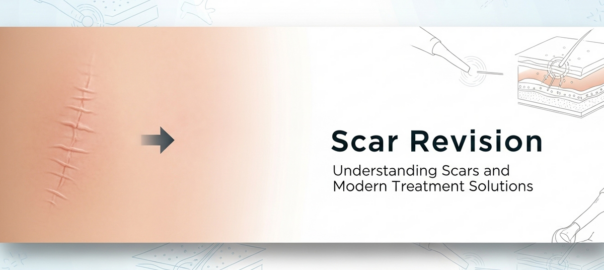
Scars are a natural part of the body’s healing process after an injury or skin damage. While some scars fade over time, others may remain visible and affect a person’s confidence or comfort. Scar revision is a medical and cosmetic approach designed to improve the appearance, texture, and function of scars. Understanding why scars form and the treatment options available can help you make informed decisions about scar management.
“Scar revision aims to improve the appearance and texture of scars caused by acne, injuries, surgery, or burns through personalized treatment plans that deliver safe and natural-looking results,” says Dr. Jyothi, a leading skin specialist in Karimnagar at Lalitha Chest and Skin Hospital.
In this blog, you’ll learn what scars are, what causes them, the different types of scars, and the treatments available to reduce their appearance.
What Is a Scar?
A scar forms when the skin repairs itself after trauma such as a wound, burn, surgery, or acne. During healing, the body produces collagen fibers to close and protect the injured area. If collagen production is uneven or excessive, a visible scar may develop.
Scars can vary in size, shape, color, and depth depending on the cause of injury, skin type, and healing process.
Common Causes of Scarring
Scarring can occur due to several reasons, including:
- Acne and Skin Infections
Severe acne, chickenpox, or skin infections can damage deeper layers of the skin, leading to permanent scars if not treated early.
- Injuries and Accidents
Cuts, burns, and traumatic injuries often leave scars, especially when wounds are deep or improperly healed.
- Surgical Procedures
All surgeries result in some degree of scarring. The size and visibility depend on surgical technique, wound care, and individual healing tendencies.
- Burns
Thermal, chemical, or electrical burns can cause extensive scarring and may also affect skin flexibility and movement.
- Genetics and Skin Type
Some individuals are more prone to developing thick or raised scars, such as keloids or hypertrophic scars, due to genetic factors.
Types of Scars
Different scars require different treatment approaches. Common types include:
- Atrophic scars: Sunken or depressed scars, often caused by acne or chickenpox
- Hypertrophic scars: Raised above the skin surface yet stay limited to the original wound location.
- Keloid scars: Thick, raised scars that grow beyond the wound boundary
- Contracture scars: Tight scars caused by burns that may restrict movement
- Pigmented scars: Scars that appear darker or lighter than the surrounding skin
What Is Scar Revision?
Scar revision refers to medical treatments aimed at minimizing the appearance of scars and improving skin texture. While scars cannot be completely erased, modern dermatological procedures can significantly reduce their visibility and enhance skin tone and smoothness.
Available Scar Revision Treatment Options
Treatment selection depends on the scar type, size, location, and skin condition. Common options include:
- Topical Treatments
Medicated creams, silicone gels, and ointments help flatten raised scars, reduce redness, and improve skin texture over time.
- Chemical Peels
Chemical solutions are applied to exfoliate damaged skin layers, promoting new skin growth and improving superficial scars.
- Microneedling
This procedure stimulates collagen production by creating controlled micro-injuries in the skin, helping reduce acne scars and uneven texture.
- Laser Therapy
Laser treatments target scar tissue and pigmentation, improving color, thickness, and overall appearance with minimal downtime.
- Steroid Injections
Corticosteroid injections are effective for raised scars and keloids by reducing inflammation and flattening the scar tissue.
- Surgical Scar Revision
In some cases, surgical correction may be recommended to remove or reposition a scar, making it less noticeable.
- Combination Treatments
Often, a combination of therapies delivers better results than a single approach, depending on the severity of the scar.
Benefits of Scar Revision Treatment
- Improves skin appearance and texture
- Boosts self-confidence
- Reduces discomfort, tightness, or itching
- Enhances skin tone uniformity
- Restores normal movement in contracture scars
When to Consult a Specialist
If a scar causes discomfort, restricts movement, or affects your confidence, it is advisable to consult a qualified dermatologist. Early evaluation allows for personalized treatment planning and better outcomes.
Scar revision offers effective solutions for improving the appearance and function of scars caused by acne, injuries, burns, or surgery. With advancements in dermatology, a wide range of safe and effective treatments are available to suit individual needs. Consulting a skin specialist is the first step toward achieving smoother, healthier-looking skin.
For expert guidance and effective scar revision solutions, we recommend scheduling an appointment with a qualified scar specialist. If you’re searching for “scar revision treatment,” “scar removal treatment,” or “pimple scar treatment,” your search ends here. Dr. B. Jyothi, a trusted scar removal specialist in Karimnagar at Lalitha Chest and Skin Hospital, offers advanced scar revision and comprehensive skin care treatments. For inquiries or appointments, please contact us at Lalitha Chest & Skin Hospital.
